
Labor Market
Is Isan's Informal Labor Boom a Sign of Resilience or Precarity?
NESDC data shows informal employment in the northeast rising for the third consecutive quarter. What does that actually mean for workers?
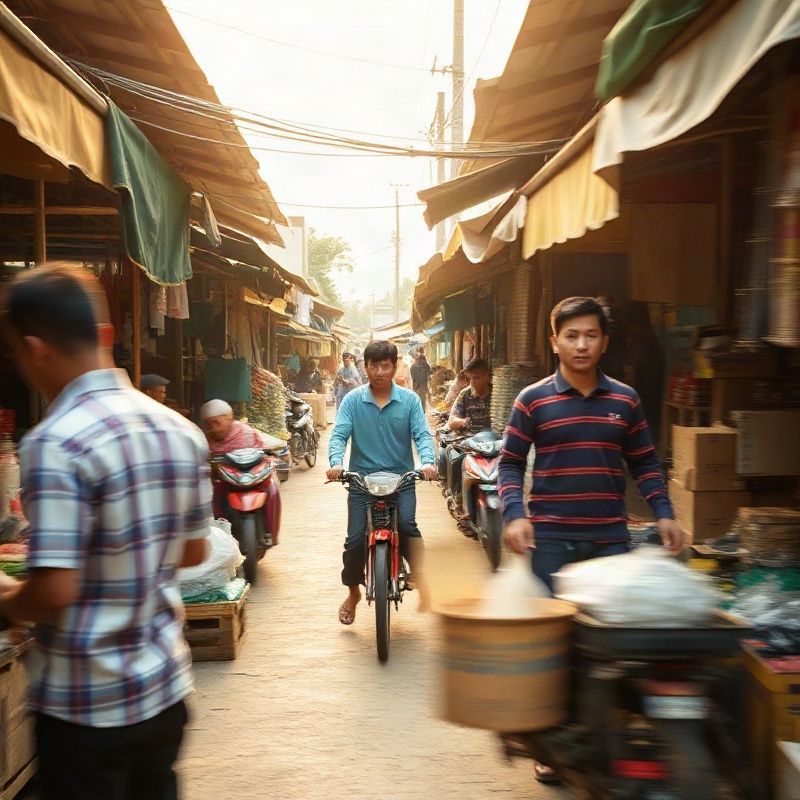
The latest National Economic and Social Development Council quarterly snapshot places informal employment in the northeast at 68.4 percent of the working-age population — up from 65.1 percent two years prior. At first glance, rising self-employment and micro-enterprise formation can look like entrepreneurial energy: people opting out of salaried work to sell produce at a morning market, drive a songthaew, or take piecework from a garment factory in their village. And in some cases, that reading is accurate. Khon Kaen's weekend market district has expanded measurably, and conversations with stallholders reveal real pride in ownership and flexible hours. But the aggregate data tells a more complicated story. Informal workers in the northeast earn, on average, 34 percent less than their formal-sector counterparts doing equivalent tasks. They have no access to the Social Security Fund's health and unemployment provisions unless they enroll voluntarily under Section 40 — a scheme that fewer than 22 percent of eligible informal workers in the region have joined, according to the Social Security Office's 2023 provincial breakdown. The picture that emerges is not one of widespread preference for independence. It is, for a significant share of the informal workforce, a story of exclusion: from stable contracts, from employer-matched social contributions, and from the kind of income predictability that allows a family to plan. The policy question — whether the government's push to expand the EEC supply chain into the northeast will create the formal manufacturing jobs that could absorb informal workers who want them — remains, as of this publication, unanswered.